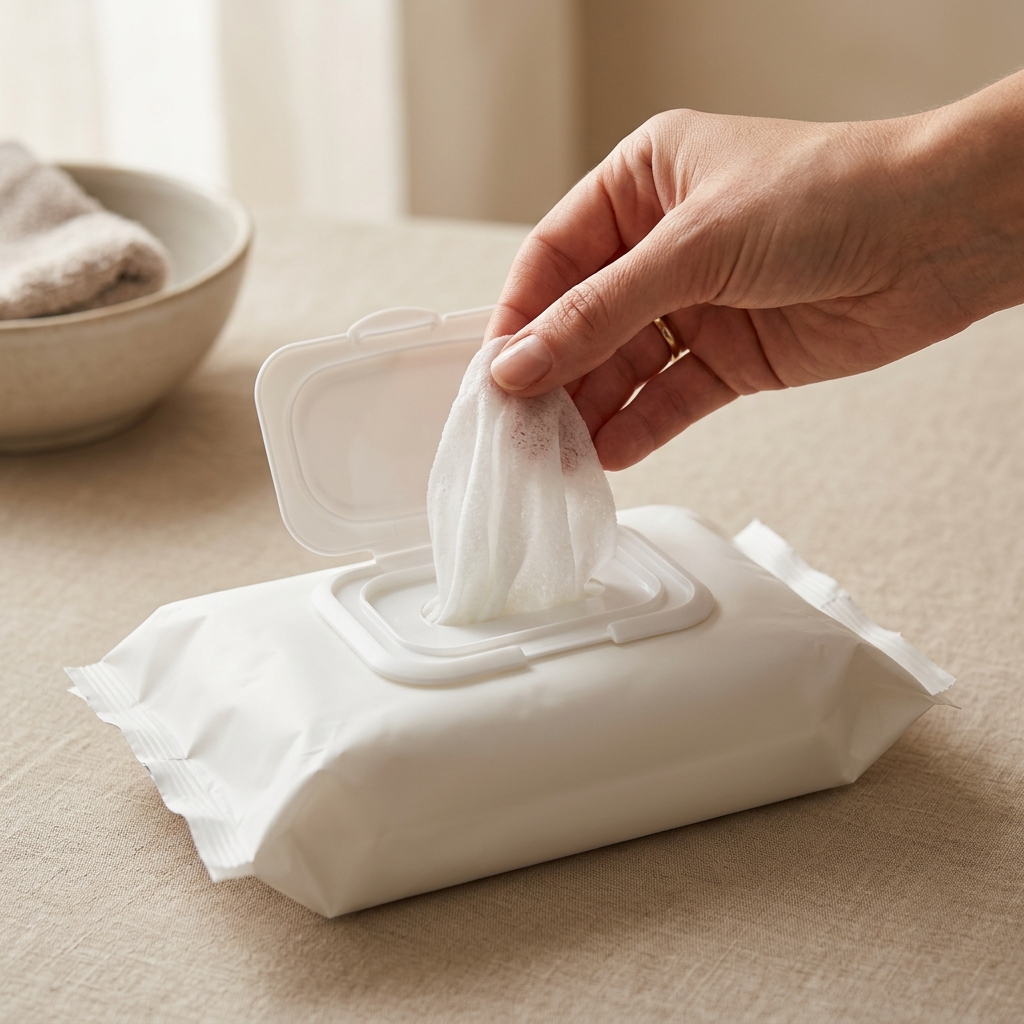
Air travel is a unique operational environment. Passengers spend long hours in low-humidity, pressurized cabins, which dry out the skin and increase fatigue. To enhance passenger comfort, commercial airlines offer complimentary refreshment wipes before takeoff, during meal service, or before landing.
Sourcing these guest amenities is a major logistical task for aviation catering and procurement managers. Because aircraft cabins have strict space, weight, and safety constraints, airlines have specific requirements when choosing hygiene suppliers.
Supplying wet wipes to global aviation carriers requires strict quality compliance and logistical precision. Below, we explore what airline procurement managers prioritize when sourcing passenger refreshment wipes.
1. Compact, Lightweight Packaging
In the aviation industry, every gram of weight translates to fuel consumption. Airline operators aim to minimize cabin weight and maximize galley storage space. Bulk canisters or heavy plastic lids are not suitable for in-flight service.
Airlines require **individually sealed, ultra-compact foil sachets**. The sachet film must be extremely thin yet puncture-resistant, protecting the pre-moistened wipe from altitude pressure changes. The packaging footprint must fit cabin serving trays and galley cart compartments perfectly.
2. Skin Safety and Non-Slip Textures
Aviation cabins house a diverse group of passengers, from infants to elderly travelers. Wipes must be hypoallergenic and suitable for sensitive skin. Formulations containing ethanol or harsh chemical perfumes are avoided, as cabin air recirculation can concentrate fumes.
Carriers prioritize **alcohol-free formulations** balanced at 5.5 pH (read more in our alcohol-free skincare guide). The fabric must be soft Spunlace non-woven, but with a textured or embossed pattern. This non-slip texture helps passengers easily wipe away dry cabin skin and meal residue.
3. Stringent Sterility and GMP Compliance
Airlines operate globally and must comply with safety regulations in multiple countries. Sourcing from a non-certified factory is a major compliance risk.
Procurement guidelines require suppliers to operate under **WHO-GMP (Good Manufacturing Practices)** guidelines. GMP compliance ensures that the water used is deionized and purified through Reverse Osmosis (RO) systems, and that all packaging lines are fully automated to prevent human contamination. Read our GMP certification overview for more details.
4. Supply Chain Capacity and High-Volume Runs
Large commercial airlines require millions of wipes monthly. A supplier must demonstrate the capacity to handle large runs and deliver consistently to airport catering hubs.
With advanced automated manufacturing lines in Rajkot, Gujarat, BR Hygiene handles high-volume bulk runs with rapid turnaround times, ensuring consistent supply chain logistics.
Conclusion
Airline wet wipes must balance lightweight packaging, skin safety, GMP compliance, and large-scale manufacturing capacity. At BR Hygiene, we specialize in high-speed manufacturing of individually sealed travel and hospitality wipes. To learn more, explore our Products Catalog or contact our sales desk today.