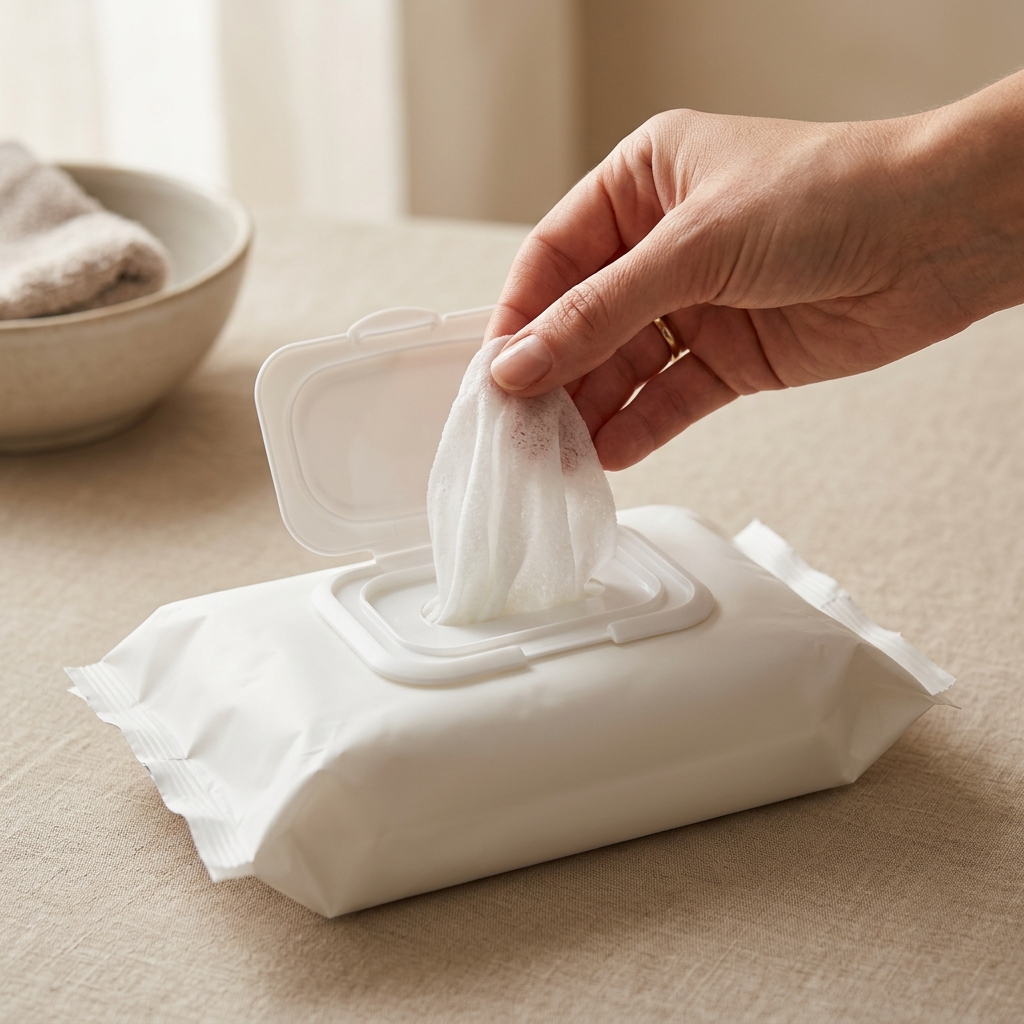
Single-use wet wipes have become an indispensable part of modern life. From hospitality welcome wipes to makeup removers and medical cleansing sheets, the convenience of a pre-moistened wipe is hard to beat. However, behind this simple everyday product lies a sophisticated, highly regulated, and fully automated industrial manufacturing process.
Understanding how wet wipes are manufactured requires a look inside advanced cleanroom facilities like the BR Hygiene plant in Rajkot, Gujarat. The process combines textile engineering, chemical formulation, and high-speed automated machinery to ensure every wipe is sterile, properly saturated, and hermetically sealed. In this step-by-step guide, we explore the lifecycle of a wet wipe from raw material to final packaged sachet.
The manufacturing cycle is divided into four main phases: raw material preparation, liquid formulation blending, automated cutting and wetting, and flow-wrap sealing. Each phase requires strict monitoring to maintain sanitization standards, which are verified by regular quality inspections.
Step 1: Selecting the Non-Woven Substrate
The foundation of any high-quality wet wipe is the fabric roll, scientifically referred to as the non-woven substrate. Unlike traditional fabrics, which are woven together via warp and weft threads, wet wipes utilize non-woven materials. These are produced by bonding fibers together through mechanical, chemical, thermal, or solvent processes.
The most popular choice for skincare and refreshment wipes is **Spunlace non-woven fabric**. Spunlace is manufactured by entangling loose fibers using high-velocity water jets (hydroentanglement). This creates a cloth that is highly absorbent, lint-free, exceptionally soft, and durable enough to withstand pulling without tearing. The fibers used are typically a blend of polyester for strength and viscose for moisture absorption. For premium eco-friendly brands, biodegradable fibers such as wood pulp or organic bamboo are utilized.
Step 2: Preparing the Liquid Formulation
Simultaneously, technicians in the chemical laboratory prepare the wetting solution, often called the impregnating liquid. The primary ingredient is always water, which accounts for over 90% to 95% of the formula. However, standard tap water cannot be used as it contains micro-minerals and bacteria that would degrade the wipe and compromise skin health.
At BR Hygiene, we process water through a multi-stage purification system involving sand filtration, activated carbon treatment, and **Reverse Osmosis (RO)**. This deionized water is then piped into sterile stainless steel mixing vats. Here, active ingredients are added:
- **Skin Conditioners:** Natural botanicals like Aloe Vera and Cucumber extracts to soothe and hydrate.
- **Humectants:** Vegetable glycerin or propylene glycol to attract moisture to the skin.
- **Surfactants:** Mild, non-ionic cleansing agents to lift grease and dirt without irritating skin.
- **Preservatives:** Skin-safe agents that prevent mold, yeast, and bacterial growth inside the sealed package.
Step 3: Slitting, Folding, and Slicing
Once the raw materials are prepared, the automated machinery takes over. The master roll of non-woven fabric is mounted onto the feeding spindle of a slitter-folder machine. The machine unrolls the fabric at high speed, pulling it through circular blades that slit the wide sheet into the exact widths required for individual wipes.
Next, the slit fabric strips pass through folding guides. Depending on the product specification, the machine folds the fabric into Z-folds, C-folds, or customized cross-folds. Folding is essential to ensure that when the consumer pulls a wipe from the pack or sachet, it unfolds smoothly to its full surface area.
Step 4: Precision Wetting (Impregnation)
As the folded fabric moving along the conveyor line enters the wetting chamber, it is continuously sprayed with the prepared liquid formulation. Precision liquid dosing valves ensure that the solution is distributed evenly across the entire width of the fabric strip.
The ratio of liquid to fabric must be perfectly calibrated. Under-wetting results in a dry, abrasive wipe that fails to cleanse, while over-wetting leads to excess liquid pooling in the sachet, causing leaks and product waste. Automated weight-sensors continuously analyze the wet rolls to guarantee moisture uniformity.
Step 5: Packaging, Sealing, and Quality Control
The pre-moistened fabric is then sliced into individual sheets and fed into the packaging unit. The packaging material—a specialized laminated foil barrier designed to keep moisture locked inside—is drawn from a separate roll and wrapped around the folded wipe.
High-temperature sealing jaws press the edges of the foil wrap together, forming airtight, hermetic seals on all sides. For multi-wipe packages, the machine die-cuts a opening on the top and applies a plastic resealable label or lid. For single-use welcome wipes, the sachets are cut, stamped with batch codes and expiry dates, and boxed.
Conclusion
The manufacturing of wet wipes is a testament to modern industrial automation. By combining purified ingredients and advanced non-woven textiles within a GMP-certified environment, we produce safe, refreshing hygiene products. If you are looking to launch your own line of custom wet wipes, check our OEM vs Private Label guide or read our tips on starting a brand in India.